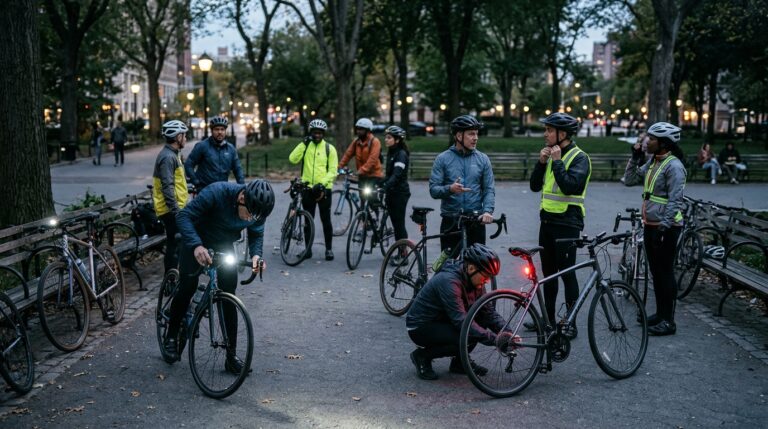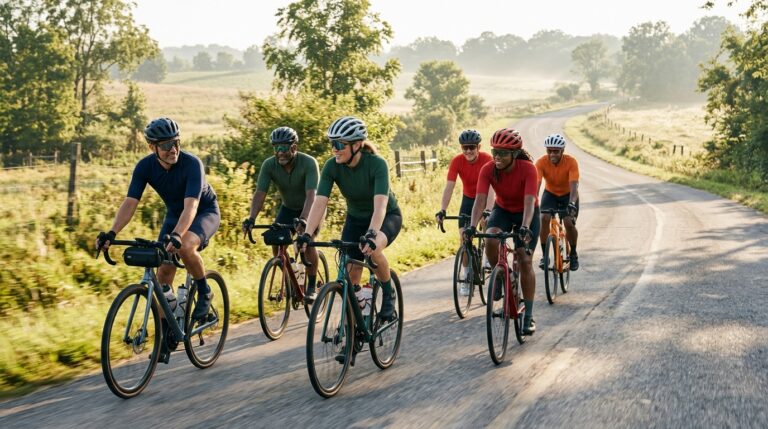
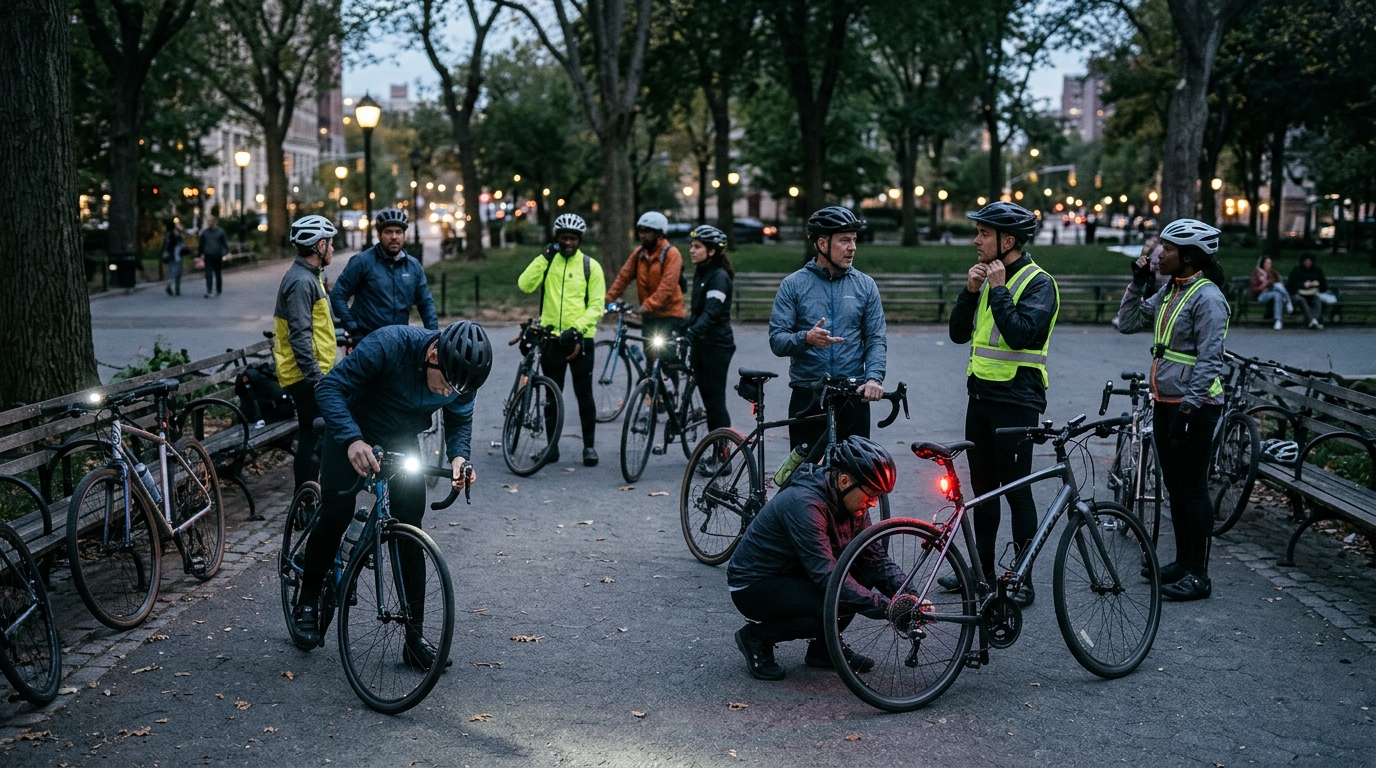
Night group cycling rides can be a great way to keep club culture active after the days become shorter. They also demand more planning than an ordinary daylight social ride. In 2026–27, the practical question for organizers is how to protect a mixed-ability group when visibility is limited and riders need to communicate clearly without creating confusion.
The goal is not to turn every evening ride into a formal race or a complex event. A successful night ride has a clear route, sensible pace, working lights and a plan for regrouping. Club leaders should also understand local bicycle laws and avoid giving newcomers the impression that riding in a group exempts anyone from traffic rules.
What Makes a Night Group Ride Different
Choose a route that matches the least experienced expected rider. Avoid narrow high-speed roads, complicated intersections and unfamiliar unlit connectors when practical alternatives exist. A slightly shorter loop with reliable pavement and clear return points will often keep the group together more effectively than a scenic but demanding route.
Plan the Route for the Least Experienced Rider
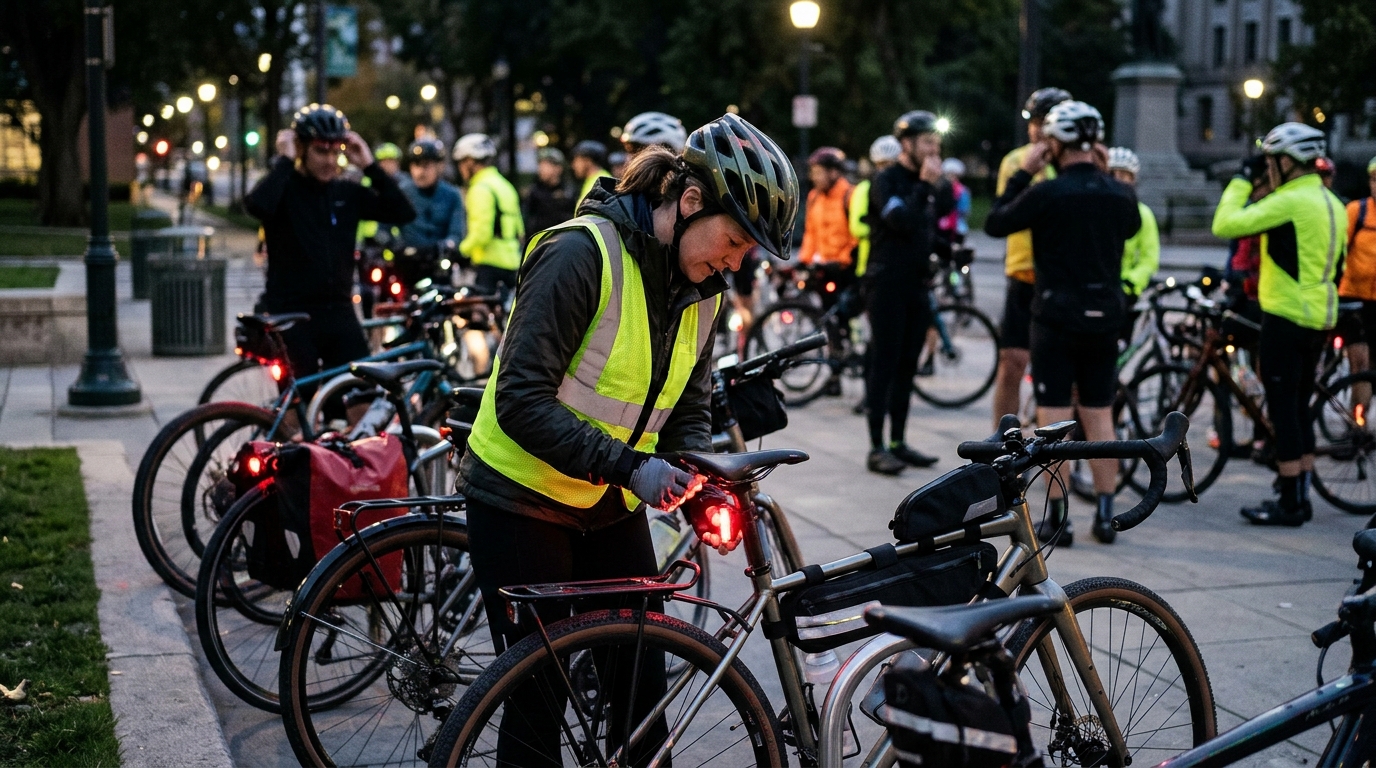
A named ride leader and sweep rider can prevent people from being left behind without anyone noticing. Agree on the pace, expected stops and how the group responds when separated at a traffic signal. Use simple signals that everyone understands. If a rider drops out, the organizers should have a way to confirm they are safe.
A club night ride should not be designed only for its fastest regulars. Select a pace that a newcomer can maintain safely and describe the distance, elevation, surface, lighting, and expected return time before people join. A leader can set the pace while a sweep watches for riders who fall behind. Agree on regroup points rather than relying on shouted instructions in traffic. The route should have a shorter option when weather changes or someone’s equipment fails, and no participant should feel pressured to exceed their confidence.
Lead and Sweep Roles Reduce Confusion
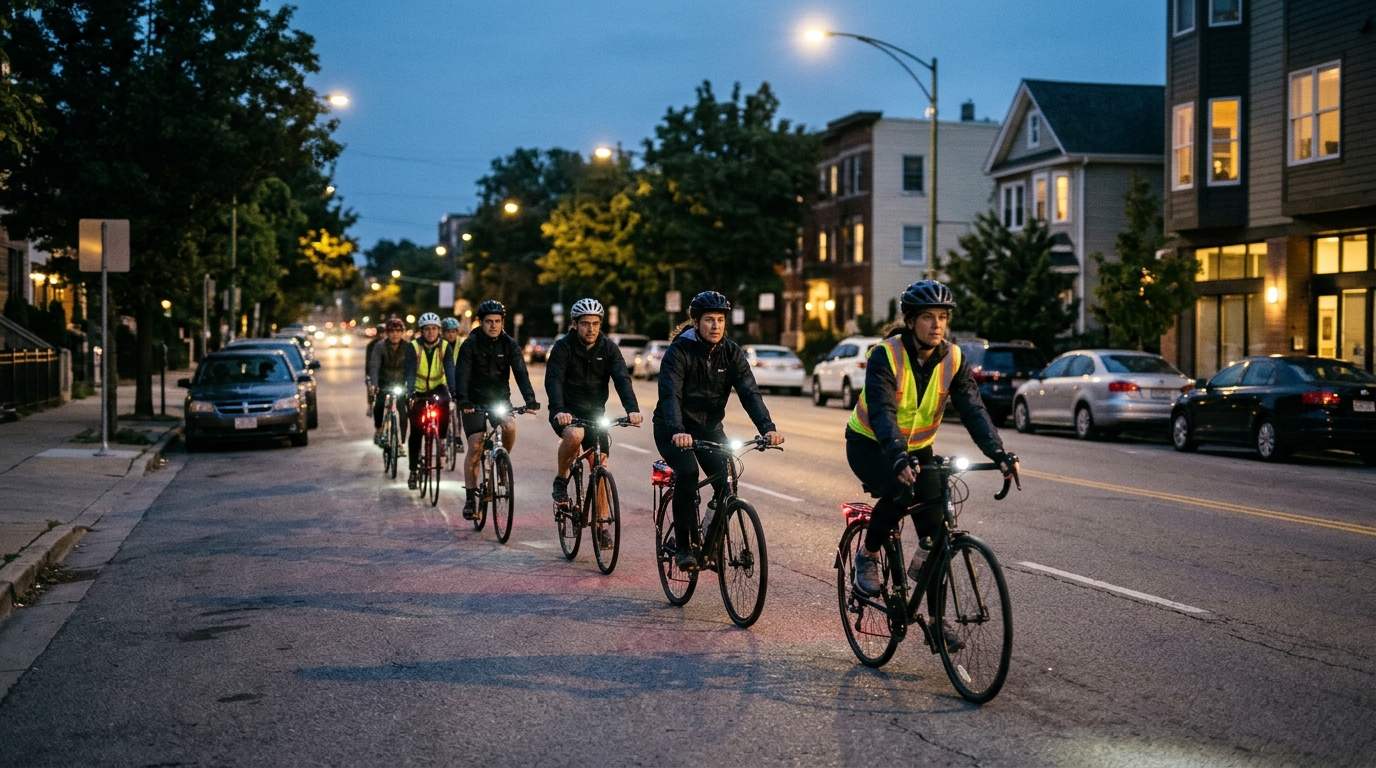
NHTSA advises cyclists to use a white front light, red rear light and reflectors in darkness or poor visibility. Organizers can include a quick light check before departure. Do not assume one bright rider makes the whole group visible. Keep lamps charged, secured and unobstructed by saddle bags or jackets.
Keep Lights and Signals Consistent
Ride predictably. Avoid sudden lane changes, unannounced braking and overtaking that surprises riders behind you. Group formation rules can differ by road and jurisdiction, so explain when riders should use single file or other permitted arrangements. At intersections, obey signals even if that means the group becomes temporarily divided.
Ride Predictably as a Group
Mechanical problems feel more complicated at night. Carry basic repair tools, a pump and a spare light when possible. Stop in a safe location away from moving traffic before inspecting a flat tire or chain issue. A club should decide in advance whether someone will escort the affected rider home or arrange alternative transport.
Lighting is most useful when the whole group uses it consistently. Each bicycle should have suitable front and rear lights, and riders need to follow the laws of the place they are cycling. Flash patterns, helmet lights, and reflective accessories can affect how other road users perceive the group, so discuss equipment ahead of time. Visibility does not grant the right of way. Predictable lane position, clear signals, safe following distances, and respectful interaction with pedestrians are central to a responsible ride.
Prepare for Mechanical Problems
For example, a twelve-person social group might plan two short loops from the same starting point. Beginners can finish after the first loop while experienced riders continue only if conditions remain good. This structure reduces pressure to keep riding when someone is cold, tired or concerned about visibility.
A Club Night-Ride Checklist
Before departure, give a two-minute briefing that names the route, distance, pace, stopping points, weather plan and emergency contact approach. Encourage riders to speak up about equipment or comfort issues. Clear expectations are especially valuable for people attending their first club night event.
For an official reference, review NHTSA bicycle visibility and riding guidance. It provides a useful source to check alongside the practical guidance here. Confirm current information directly rather than relying on an undated copy or an unverified social post.
Brief Riders Before Departure
After the ride, discuss what went well and which intersections felt confusing. If two riders repeatedly missed a turn, the problem may be the route briefing rather than their attention. Small improvements help build a club culture that welcomes new people without compromising predictability.
After a ride, a five-minute debrief can improve the next one. Ask whether the advertised pace was accurate, whether intersections caused unexpected bunching, and whether anyone lacked enough light or suitable clothing. Record mechanical problems without embarrassing the rider who experienced them. Update the route notes and share any correction with future participants. Clubs build trust when safety instructions are practical and applied consistently, not when rules exist only in an organizer’s document that members never read.
Use the following checklist as a decision record. Complete the steps in a sensible order, make notes about any unresolved issue, and return to them before acting. The objective is to improve the quality of the next decision—not to claim that a single list replaces local rules or individual circumstances.
- Set a route with predictable crossings and a return option. Put the relevant date and location beside the result, so a future reader knows exactly when and where the information applies. Keep the original source available for comparison.
- Assign a leader and sweep before rolling out. Use this step to make a specific decision rather than collecting facts without a purpose. Where the answer is uncertain, choose the safer or more conservative option.
- Check every bicycle’s front and rear lights. Keep related documents, photographs, or confirmations together in a clearly named folder. A simple record can prevent details from being lost when circumstances change.
- Agree on pace, signals and regrouping points. If other people are involved, agree in advance who is responsible for this part of the plan. Do not rely on somebody else to guess that it has been completed.
- Carry basic repair supplies and a spare lamp. Review the result whenever conditions or requirements change. An earlier check may be useful history, but it is not automatic proof of what applies today.
- Stop or shorten the ride if conditions become unsafe. Know when to stop and ask an official source or qualified professional for help. A checklist can organize your judgment, but it cannot eliminate every risk.
How to Review the Ride Afterwards
Night group cycling rides work best when the group treats safety as part of the social experience. Visible equipment, patient leadership and route discipline make evening cycling more enjoyable and help riders return confidently for the next meetup.
For more context on a related issue, read our our first cycling club group-ride guide. That existing article approaches a different part of the subject; compare its scope before applying advice across situations.
Common questions
Should a group ride through a red light to stay together? No. Follow traffic signals and regroup safely after the intersection. Check the current source and the relevant location before acting; a general guide cannot account for every change in operating conditions, rules, or individual circumstances.
Does a ride leader replace individual responsibility? No. Every rider must operate predictably and follow applicable rules. Keep the underlying documents and dates accessible if you need to discuss the issue later. When the stakes are significant, obtain advice from an appropriate qualified source.
The value of this night group cycling rides guide is in a habit of verification: decide what matters, check the most relevant source, preserve the result, and update a plan when new facts appear. The underlying steps should remain useful even after the season or publication year has passed.