Your first cycling club group ride can feel exciting and intimidating at the same time. You may wonder whether you can maintain the pace, understand hand signals, or ride comfortably near unfamiliar cyclists. Fortunately, most welcoming cycling groups expect newcomers to have questions.
In 2026, cycling clubs bring together people with different bikes, abilities, and goals. Some organize relaxed social rides, while others focus on endurance, structured training, or competitive performance.
The key is choosing a ride that matches your experience and preparing before you arrive.
This guide explains group ride etiquette, basic communication, cycling formations, and essential safety checks. It also shows beginners how to choose their first club ride without feeling pressured to keep up with experienced racers.
How to Prepare for Your First Cycling Club Group Ride
A successful group ride begins before the wheels start turning. Choosing the right club, understanding the route, and checking your equipment can prevent many common beginner problems.
Rather than joining the fastest ride available, look for one that clearly welcomes new cyclists. A slower group often provides better opportunities to learn riding techniques and become familiar with club expectations.
Choose the right cycling club and ride difficulty
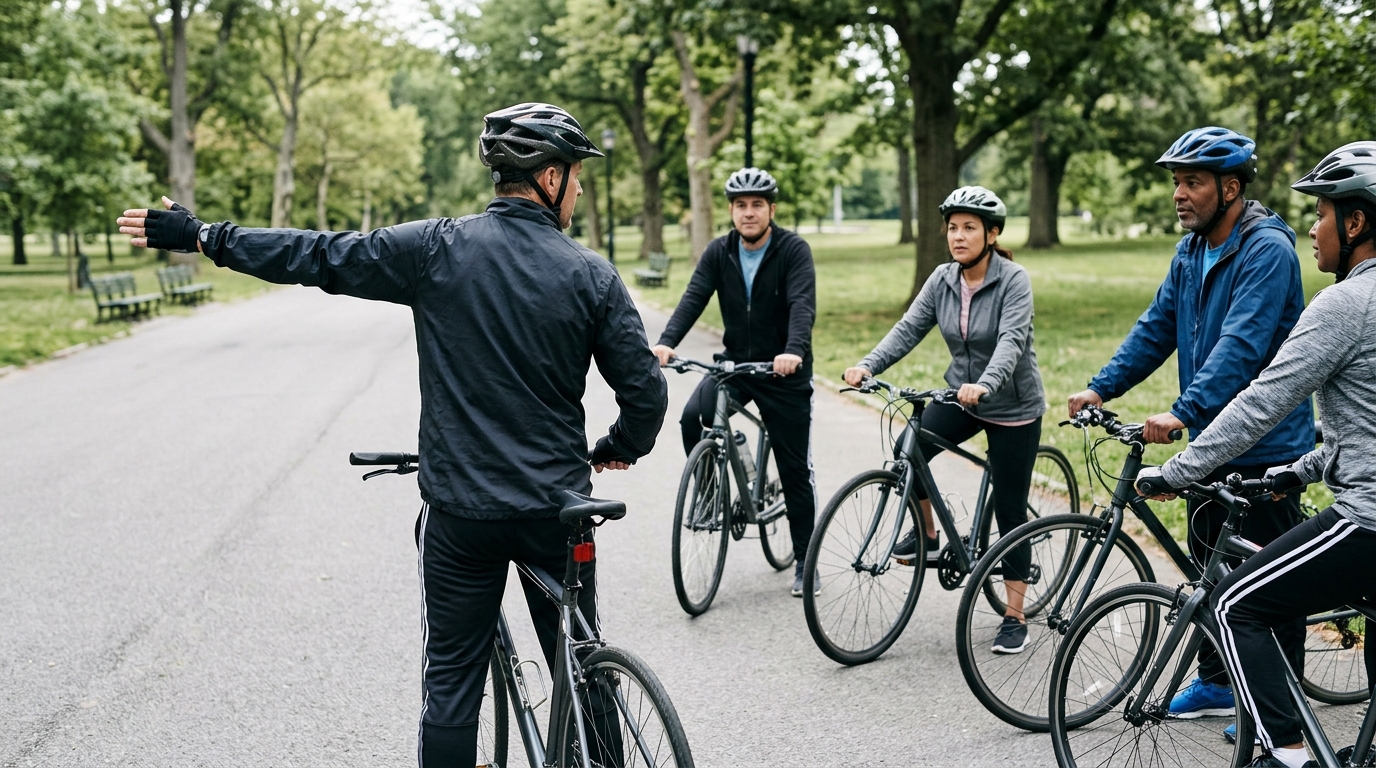
Begin by reviewing a club’s ride descriptions. Look for information about distance, terrain, average speed, elevation gain, and expected experience.
Some clubs divide participants into groups based on pace. Others offer beginner rides, social rides, and structured training sessions.
Contact the organizer if the description seems unclear. Ask whether the ride includes scheduled regrouping points or a designated leader who supports newcomers.
Also, confirm whether the club follows a no-drop policy. A no-drop ride generally aims to keep participants together, although the exact arrangements can vary.
A ride advertised as beginner-friendly should still match your current endurance and handling skills.
Understand pace groups and no-drop rides
A club may describe its groups using letters, average speeds, or terms such as relaxed, moderate, and fast.
However, these labels are not standardized across organizations. One club’s moderate group may ride considerably faster than another’s.
Ask the leader whether the published pace represents the moving average or the expected cruising speed on flat roads.
Consider hills as well. A short route with steep climbing may feel more demanding than a longer, flatter ride.
If you are unsure, start with the easier option. You can explore faster groups after you understand your comfort level.
For help selecting equipment, read our road, gravel, and all-road bike comparison.
Check your bicycle and essential riding gear
Before departure, inspect your tires, brakes, chain, wheels, and steering. Make sure nothing feels loose or damaged.
Check tire pressure against the recommendations for your tires, rims, rider weight, and intended terrain.
Wear a properly fitted bicycle helmet. Choose comfortable clothing that allows you to move freely and remain visible to other road users.
Carry drinking water, basic repair supplies, identification, and a fully charged phone.
For longer rides, bring enough food to support your expected effort. A small snack can also help if the group makes an unplanned stop.
Ask whether the route has suitable refill points, public restrooms, and reliable mobile coverage.
The National Highway Traffic Safety Administration recommends checking bicycle condition, wearing a helmet, and using appropriate visibility equipment.
Learn basic cycling hand signals and group communication
Cyclists use signals and verbal warnings to communicate intentions and identify hazards.
Before the ride begins, ask the leader which signals the club commonly uses. Different groups may have slightly different conventions.
Most riders understand standard turn signals. However, groups may use additional gestures for potholes, gravel, parked vehicles, or slowing traffic.
Always prioritize control of your bicycle. Do not remove a hand from the handlebars if doing so would make you unstable.
Common signals for turns, slowing, and hazards
For a left turn, riders generally extend the left arm. For a right turn, riders may extend the right arm or use another legally recognized signal.
Braking or slowing signals vary among clubs. A leader may use a hand gesture, a verbal warning, or both.
Hazard warnings often involve pointing toward a pothole or road debris, followed by a brief verbal call.
Use a clear voice without shouting unnecessarily. Avoid sudden swerves when pointing out road problems.
Remember that traffic laws govern required signaling. Check the rules for the state or country where you ride.
For authoritative guidance, review the League of American Bicyclists’ Rules of the Road.
Group Ride Etiquette and Safety Rules Every Beginner Should Know
Group riding requires more awareness than cycling alone. Riders must consider the people beside and behind them, not just the road ahead.
Smooth movements, predictable positioning, and clear communication help everyone maintain a comfortable riding environment.
However, club customs never override traffic laws. Riders must still obey signals, yield where required, and follow local rules concerning lane positioning.
Ride predictably and maintain safe spacing
New riders sometimes think they must stay extremely close to the cyclist ahead. That assumption can create unnecessary risk.
Maintain enough space to react safely if another rider slows or encounters a hazard.
Avoid overlapping your front wheel with the rear wheel of the cyclist ahead. Sudden sideways movements can cause contact and a loss of control.
Look beyond the rider directly in front of you. Watching the road farther ahead can help you anticipate turns, intersections, and changes in pace.
How to ride safely in a group formation
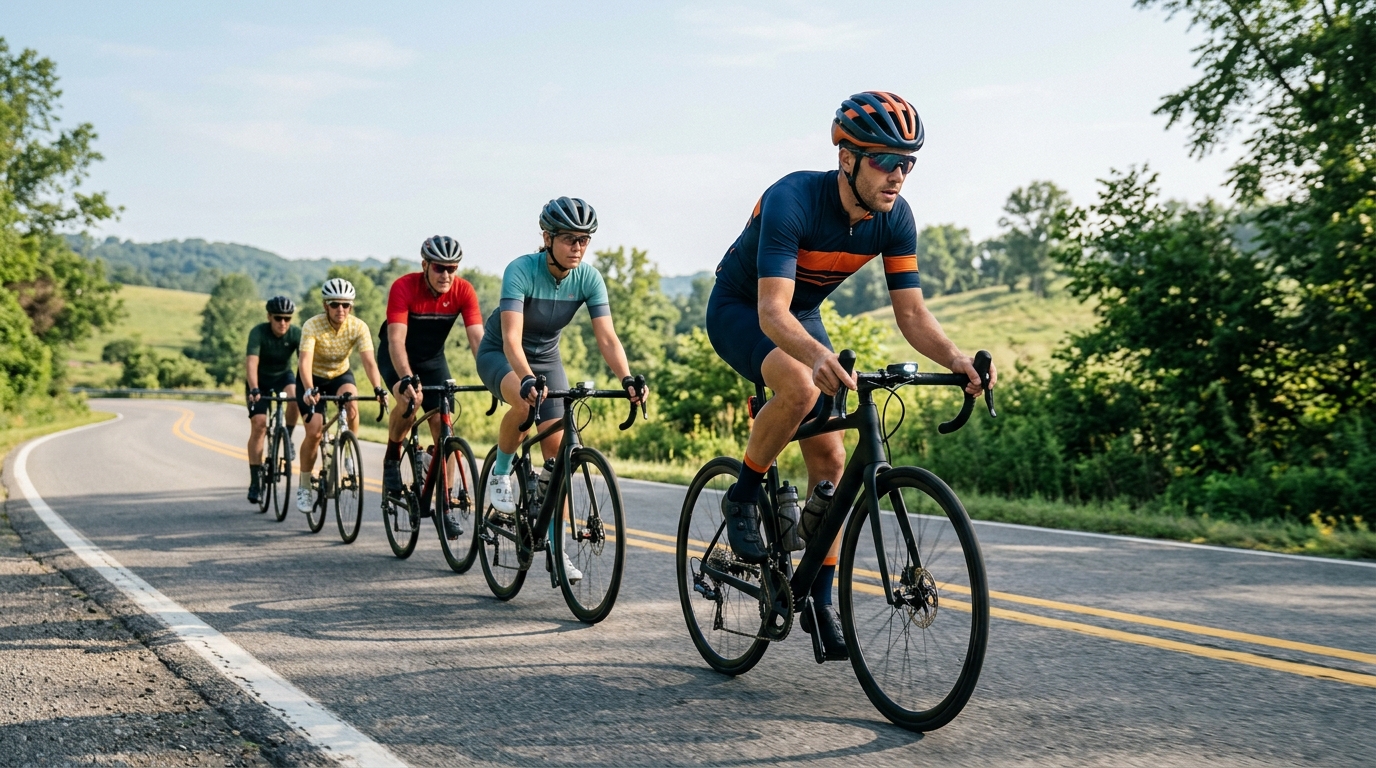
Many clubs ride single file on narrow or busy roads. Other routes may permit two-abreast riding where local law allows and conditions remain suitable.
Follow the leader’s instructions and respect traffic regulations.
Keep a predictable line through corners. Avoid abrupt braking, unexpected acceleration, or sudden changes in direction.
When a gap opens, increase your effort gradually rather than sprinting without warning.
Never cross an intersection simply because the cyclist ahead made it through a green light.
Each rider must assess traffic signals and right-of-way independently.
If you feel uncomfortable in a tight formation, tell the leader. Riding slightly farther back with appropriate spacing may be a better choice while developing confidence.
Some clubs use pacelines, in which riders rotate through positions at the front to share the effort against the wind.
However, beginners should not attempt unfamiliar paceline maneuvers without instruction.
Experienced riders can explain when to rotate, how to communicate, and what spacing the group expects.
A relaxed social ride offers a better environment for learning these skills than a high-speed training session.
For groups using electric bicycles, read our e-bike group riding etiquette guide.
It explains why acceleration, speed differences, and considerate pacing matter when assisted and unassisted bicycles share a ride.
Beginners should also understand how group rides handle stops.
Some leaders pause at major intersections or designated regrouping points. Others expect participants to navigate independently.
Ask about these arrangements before leaving the meeting location.
When the group stops, move completely out of traffic where possible. Avoid blocking intersections, sidewalks, driveways, or shared paths.
Leave room for pedestrians and other cyclists to pass safely.
During the ride, communicate mechanical problems early. A minor issue can become more serious if you ignore it while trying to maintain pace.
For example, a rubbing brake, loose accessory, or damaged tire deserves attention before continuing at speed.
If you need to stop, tell another rider when practical and choose a safe location.
Do not stop suddenly in the middle of the group unless an immediate hazard makes it necessary.
Weather also affects group safety. Rain can reduce traction, while strong winds may change how bicycles handle.
Reduce speed when conditions require additional control.
Cold mornings and shorter autumn days can affect visibility. Carry suitable front and rear lights and wear clothing appropriate for changing temperatures.
Even daytime riders may benefit from visible equipment, particularly under overcast skies or near shaded roads.
Remember that a bicycle club includes people with different levels of experience.
Do not pressure another participant to descend faster, ride closer, or attempt a maneuver that exceeds their comfort level.
Likewise, avoid criticizing a beginner who asks for clarification.
Supportive riding habits help clubs retain members and make cycling more approachable.
After the ride, thank the leader and ask for feedback if you want to improve.
You can also review what went well and what felt difficult.
Did you bring enough water? Was the route too demanding? Did you understand the signals?
These questions can guide your preparation for the next outing.
If you enjoyed the social experience, consider exploring the club’s other routes and events.
Our cycling tourism guide for 2026 explains how group trips and bike-friendly routes can create new riding opportunities.
You might also benefit from a cycling skills course before joining faster groups.
The League of American Bicyclists offers education resources for beginning and experienced riders. Its Smart Cycling program focuses on confidence, bicycle control, and responsible road use.
Formal instruction can reinforce habits that experienced cyclists sometimes take for granted.
Learning basic braking, cornering, signaling, and traffic awareness in a controlled environment can make future club rides more comfortable.
As your experience grows, you may choose longer routes or more challenging terrain.
However, improvement does not require racing. Many cyclists value community, fitness, exploration, and regular outdoor activity more than speed.
A club that respects those goals can become an enjoyable part of your weekly routine.
Your first cycling club group ride in 2026 should be about building confidence, not proving your ability to keep up at any cost.
Choose a suitable ride, prepare your bike, communicate clearly, and maintain a safe distance from others.
With practice and the right group, riding alongside other cyclists can become one of the most rewarding ways to explore local roads and meet new people.
Safety note: This article provides general cycling education. Road laws, club practices, route conditions, and individual abilities vary. Follow local regulations and obtain qualified instruction for unfamiliar group riding techniques.